Dvir Aviam Ezra
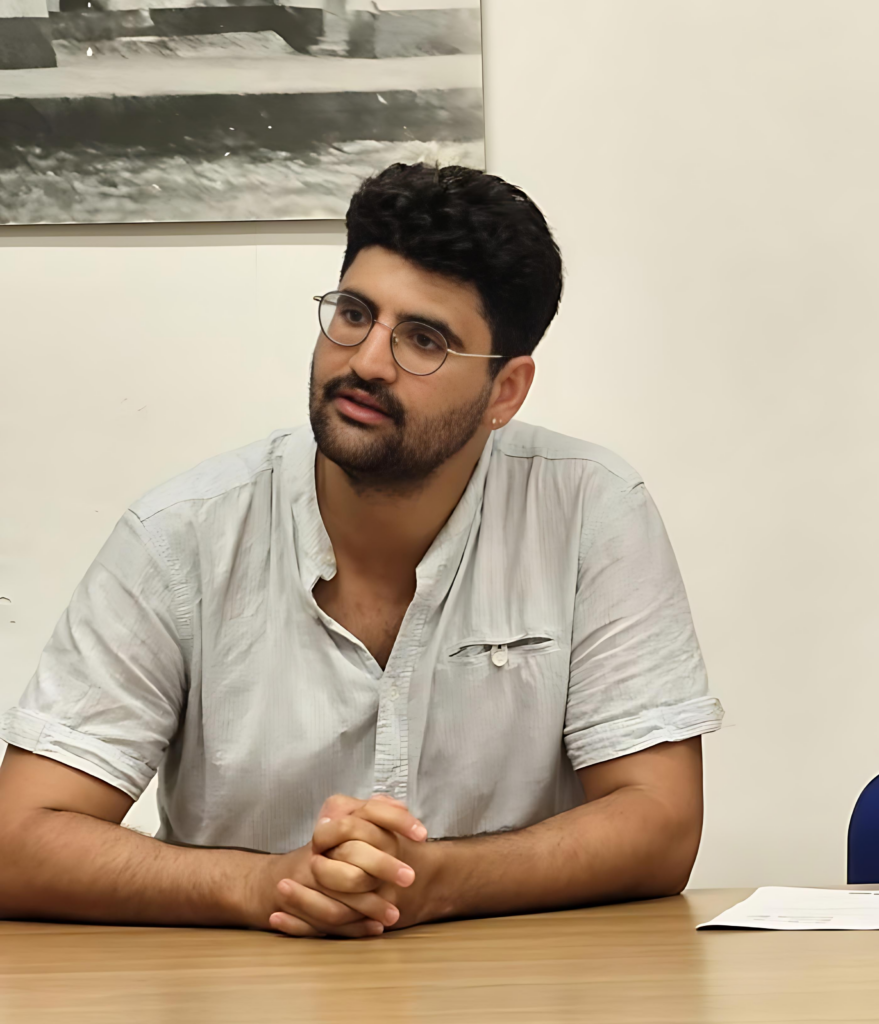
Dvir Aviam Ezra
Please introduce yourself
I am Dvir Aviam Ezra, 28. I am a lawyer, an activist, and a federalist. Currently, I am a PhD Student for Law/Economics at the Institute for Sustainable European Financial Architecture in Frankfurt, Germany.
I was born in Tel Aviv as a third generation to holocaust survivors. From a young age I was drawn to politics by my disgust from war, oppression, and discrimination. From the age of 12, I protested, wrote, marched and argued while fighting for my values. I held various positions and, from working in a human rights NGO for torture victim to leading an interreligious dialogue society in my campus, I engaged various levels for peace, justice, and equality.
I joined JEF in 2021 through a picnic organised by JEF Brussels. I quickly joined field activities and infostands, before being co-opted to the national board of JEF Belgium, and later elected as policy officer. I represented JEF Belgium in JEF Europe’s Federal Committee, contributed to PC3 discussions and ran advocacy and political campaigns at the heart of the EU.
In parallel, sparked by my interest in journalism, I joined The New Federalist (TNF) as a writer and advanced to the editorial board. In the last two years I am the Senior Chief Editor of the magazine and led its rejuvenation. I never lost my passion for writing, and I kept contributing, publishing 30 articles. I also regularly advocate for our ideas on mass media, and published on Politico EU, Guardian, Tagesspiegel, and Brussels Times.
My JEF activism also included co-organising of flagship national JEF events, such as the Training Days of JEF Belgium, the International Berlin Seminar of JEF Germany, and playing a leading role in JEF’s engagement with peace activists in the Middle East, which led to the launch of the Federalist Peace Forum and the awarding of a COE grant.
What is your motivation for the role?
Europe and the federalist movement are under threat by rogue actors aiming to reverse the European integration that brought peace, prosperity, and freedom. We must counter these trends while building a Federal Europe, one step at a time.
This is why I am running to become a member of the next Executive Board of JEF Europe.
I want to make our federalism heard loud and clear. JEF, in its core, is a political organisation, and our ideas are enshrined not only in our political resolutions but also in our statutes, the Manifesto of Ventotene, and our platform. As an EB member, I would ensure that our political ideas are heard and reflected, within all levels of the movement and the public discourse outside of it.
In addition, I put strong emphasize on field activism. JEF should be present on the streets, in the protests in Serbia and Georgia where activists are fighting every day for Europe, holiday celebrations, pride parades, and in rural areas. Local and national sections are already doing it- in every given week there are inspiring actions, from protests to meetings in bars to educational activities. They must receive full backup from the European board.
I also invite you to read my full candidacy letter to review how I plan to achieve these goals and additional priorities motivating my campaign (Outreach to Europeans with Migration Background, Governance within JEF, and Global Engagement for a Safer World).
What is your vision for the future of JEF?
What should be the Political Commissions and Task Forces/ Working Groups for the mandate 2025-2027 and why?
Most existing PCs and TFs are necessary and should continue operating, but I propose setting up additional ones to match the political situation and our priorities as a movement.
Task Force Against Extremism – the rising threat of political anti-European extremism calls for a concrete response from JEF Europe. Several FC candidates are working to establish such a task force which will launch campaigns and educational activities to protect European democracy.
Task Force on Internal Statutory Reform – several sections believe JEF Europe should be reformed. Concretely, elements regarding the relationship between the FC and the EB remain unresolved, while the sizes of these statutory bodies may warrant changes. The process will be long, but it is time to start it and review what our activists want to change regarding JEF structures.
Working Group on Migration – this working group existed until 2023, but the issue of migration only gained in relevance since. Formulating a policy on migration while also developing outreach to migrants and European with migration background is a political necessity. A dedicated working group on the topic will harness the required expertise and discuss this contentious topic in an open and democratic manner.
My contact information
Nenad Bušić
Nenad Bušić
Please introduce yourself
What is your motivation for the role?
I decided to run for the position of Executive Board member because I feel a deep connection with the federalist ideas, and because I deeply believe in Europe as a federal, democratic and free, which nurtures freedom of speech, rule of law, human rights and equality all across Europe. These are the fundamental values I strongly believe in and that JEF also nurtures. However, our goals are yet to be achieved, and that’s why I decided that I want to run for a member of the EB – I want us not only to advocate for these values, but to be a prime example of them. This has not been the case – in order to participate in the JEF Europe events, you need to pay out of pocket to come to the event and participate in it. I believe that this has been fundamentally wrong, because it puts someone’s financial capabilities in front of a more democratic process, limiting it to only a handful of people who can pay to come. I want to make JEF more financially accessible, and I want to do that by making better use of our budget, implementing a new system of travel financing for the delegates.
I also want to make the work of the EB more transparent by putting a clear institutional framework in place that would rebuild the trust between the EB, directly elected members of the FC and most importantly, sections.
What is your vision for the future of JEF?
What should be the Political Commissions and Task Forces/ Working Groups for the mandate 2025-2027 and why?
The current Political Commissions and Task Forces are quite good; however, there are several changes that I believe we need to make in the upcoming mandate. Firstly, I believe that we would need to move the question of enlargement within the Political Commission for Internal European Affairs (PC2) from the Political Commission for External Affairs and Global Governance (PC3). The question of enlargement should not be seen as an external question, but rather an internal one – sending a clear message “Enlargement, Now!”. This needs to be followed by a stronger advocacy on treaty change, to make sure that the institutions of the EU can keep up with the enlargement.
When it comes to the Task Forces, I believe that we should work more on the empowerment of the current ones to take a more proactive role within the network, with the addition of a Task Force for Transparency. This TF would ensure that the work of the network and its bodies is transparent, and would make suggestions on how we can increase the transparency institutionally. I believe that the TF for Transparency should not only focus on the European level, but also create suggestions on how sections can make their work more transparent, giving examples of good and bad practices and making a Transparency recommendation book.
My contact information
Elion Kollçaku
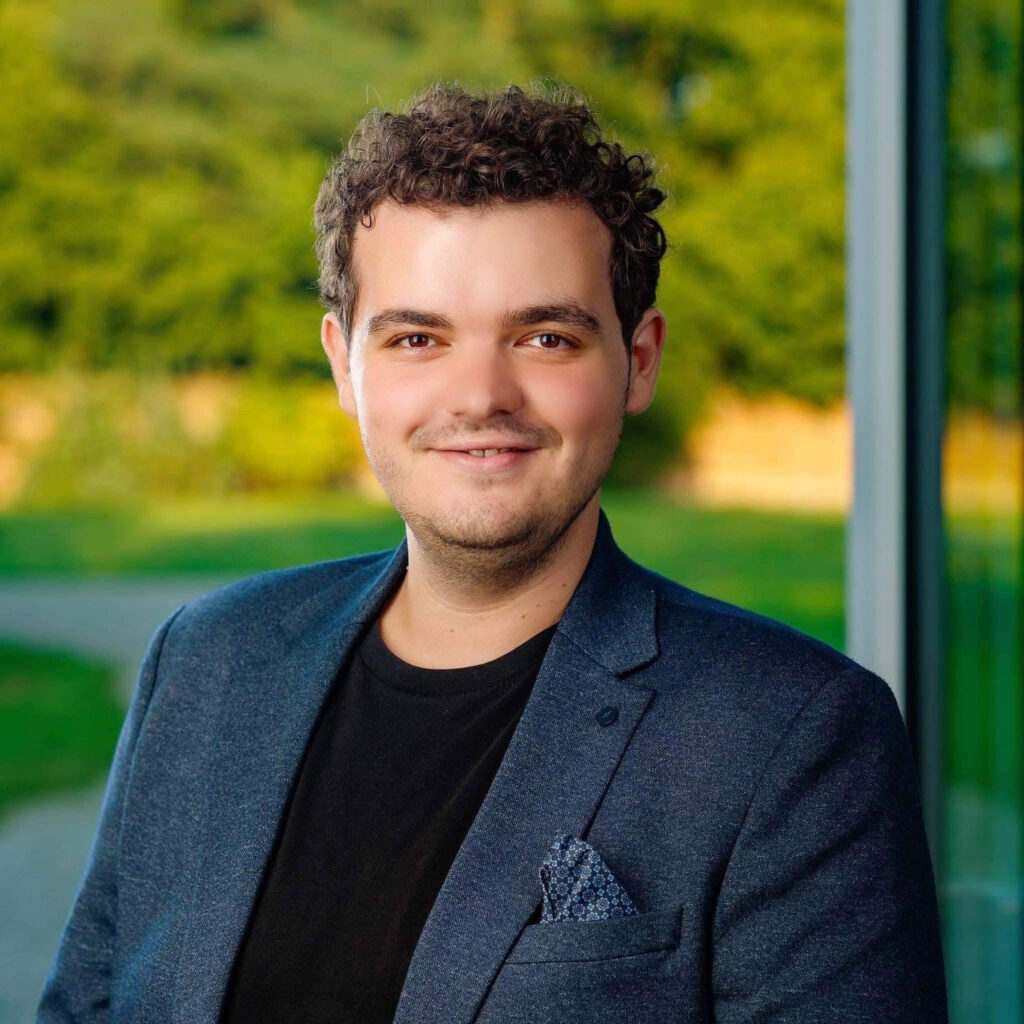
Elion Kollçaku
Please introduce yourself
Throughout my journey, I have served as a trainer, organiser, and advocate within JEF Europe, contributing to numerous projects that link federalism with youth engagement, reconciliation, and democracy. I have been part of two pools of trainers for JEF Europe, facilitating seminars that encouraged young Europeans to engage in policy debates, understand EU institutions, and act as changemakers in their local communities. This experience has given me a deep understanding of JEF’s internal processes — from project design and implementation to advocacy and communication.
I also co-founded the Federalist Society at the College of Europe in Natolin, together with a fellow JEFer, to promote the spirit of European unity in academic spaces. Through this initiative, we invited inspiring speakers such as Robin Mudry and Antonio Argenziano to discuss the future of Europe and federalism with students from across the continent. This project remains one of the most meaningful experiences I have led, as it merged my academic background in European studies with my activism in JEF.
In the Western Balkans, I have organised numerous youth dialogues and public events, such as Youth Talks and Let’s Talk about the EU, often in cooperation with European embassies. These events explored topics like EU integration, human rights, and reconciliation, while providing young people from Kosovo, Albania, and Serbia a platform to exchange ideas about Europe’s shared future.
Coming from a region that is still outside the EU, I have always sought to act as a bridge — connecting the Western Balkans with the European federalist movement. I believe that the Executive Board of JEF Europe benefits from having a strong voice from this region, to ensure that our advocacy reflects the aspirations of all young Europeans, both inside and outside the Union.
In short, my JEF journey has been one of passion, dialogue, and action — rooted in the belief that Europe’s unity will only be complete when every young person, from Lisbon to Prishtina, feels part of our shared European story.
What is your motivation for the role?
Coming from Kosovo, a country that still stands outside the European Union, I have experienced firsthand what it means to believe deeply in Europe while being left in its waiting room. This experience drives my determination to make EU enlargement not just a technical process but a real political priority. If elected, I want JEF Europe to take a clearer stance on enlargement — framing it as a project rooted in solidarity, democracy, and European values. The Executive Board should use its voice to remind policymakers that Europe’s story is incomplete without the Western Balkans.
Beyond enlargement, my campaign is built on three main priorities:
Revitalising the federalist vision by positioning JEF as a stronger political voice — one that openly advocates for a truly Federal Europe with a common defence policy capable of protecting its citizens, democratic institutions that are transparent and accountable, and decision-making that reflects the will of all Europeans.
Bringing inclusivity and diversity into our structures — making sure that smaller sections and underrepresented regions have a voice in JEF Europe’s decision-making.
Strengthening our communication and outreach, ensuring that our federalist message reaches beyond our circle, inspiring new generations of activists who might not yet identify as “federalists” but believe in the same values.
In my six years within JEF, I have been a trainer, organiser, and advocate. I’ve led and contributed to projects that promote European values, reconciliation, and civic engagement, and I’ve seen the power of JEF in transforming how young people see themselves as Europeans. I want to bring that same energy, creativity, and sense of purpose to the Executive Board.
I believe the Executive Board needs a strong voice from the Western Balkans — someone who can bring in new perspectives, bridge experiences, and ensure that our federalist message resonates across all parts of Europe. My aim is to strengthen the link between JEF Europe and its sections in the region, while continuing to work closely with our established partners across the EU.
If elected, I will work to make JEF Europe not only an organisation that talks about Europe’s future but one that shapes it — through fresh ideas, inclusion, and real advocacy. I will bring my background in European studies, my experience in civil society and media, and my strong belief in youth participation to help JEF grow as a movement that is both visionary and accessible.
For me, this is more than a candidacy. It’s a continuation of a journey that started years ago with a belief that Europe can be better — fairer, stronger, and truly united. And JEF, with its unique history and spirit, is the best place to make that vision real.
What is your vision for the future of JEF?
Revitalising the federalist vision with security at its core: JEF should be a bold and confident political actor, advocating clearly for a Federal Europe that is capable of protecting its citizens. A strong common defence, combined with accountable democratic institutions, is essential to ensure stability, safeguard democracy, and respond effectively to internal and external challenges. Federalism should be presented as a concrete solution to issues such as security threats, democratic backsliding, and political fragmentation.
Making EU enlargement in the Western Balkans a real political priority: Young people from the region must feel included in Europe’s story. JEF should actively connect sections in the Western Balkans with peers across the EU, promote dialogue on shared values, and advocate for tangible progress in enlargement.
Supporting small sections: Every JEF section, no matter its size, should feel included and empowered. Small sections must have opportunities to contribute to JEF Europe’s activities, be heard in decision-making processes, and receive support to increase their visibility, membership, and local impact.
Strengthening communication, visibility, and outreach: Our message of democracy, federalism, and unity must reach beyond our immediate circles. This requires a creative, multilingual, digital-first approach, highlighting the work of all JEF sections across Europe, amplifying our positions in public debates, and making campaigns accessible and engaging for all young Europeans.
To achieve these goals, I would focus on:
Encouraging youth participation from underrepresented regions and smaller sections.
Promoting events, campaigns, and training that combine federalism, civic engagement, and practical political advocacy.
Fostering cross-border cooperation and dialogue so that all young Europeans feel connected to both JEF and the broader European project.
In short, JEF should be inclusive, bold, and action-oriented, shaping the European debate while empowering the next generation of federalist leaders and ensuring that every section — large or small — has a voice in Europe’s future.
What should be the Political Commissions and Task Forces/ Working Groups for the mandate 2025-2027 and why?
Security and Common Defence Commission: Security is one of the most pressing concerns for Europe today, from external threats to internal democratic backsliding. This commission would focus on promoting policies for a common European defence, resilience against hybrid threats, and the role of youth in shaping a secure Europe. As a federalist organisation, JEF must articulate how a unified Europe can better protect its citizens.
EU Enlargement and Western Balkans Working Group: The next mandate must prioritise Western Balkans integration. This group would work on strategies to connect youth in the region with their peers across Europe, advocate for tangible progress in enlargement, and ensure that sections from the Western Balkans have a strong voice within JEF.
Political Communication Task Force: Clear, innovative, and inclusive communication is essential for JEF to reach beyond its existing circles. This task force would focus on multilingual campaigns, digital-first strategies, and storytelling that highlights the work of sections across Europe, promotes federalism, and engages young people in meaningful dialogue.
Human Rights, Democracy, and Reconciliation Commission: Reflecting JEF’s values, this commission would focus on human rights advocacy, reconciliation initiatives, and youth-led projects that connect communities across borders. It would build on my experiences with reconciliation projects in the Western Balkans, fostering dialogue and cooperation between young people from diverse backgrounds.
Small Sections Task Force: Every section, regardless of size, must feel included and empowered. This task force would:
Provide guidance and support to strengthen local projects, increase membership, and enhance visibility.
Facilitate cross-border cooperation by connecting small sections with larger, more established sections for mentorship, exchange of best practices, and joint initiatives.
Ensure representation in JEF Europe decision-making, so that the perspectives and needs of small sections are included in policy discussions and advocacy efforts.
Promote inclusivity, ensuring that all sections, large or small, feel part of the European federalist movement and can actively contribute to shaping JEF’s priorities.
Youth Participation and Inclusion Task Force: To make JEF truly representative, this group should focus on empowering underrepresented regions, creating opportunities for young Europeans to participate actively in decision-making, and ensuring that JEF remains diverse, inclusive, and connected to youth across the continent.
These commissions and task forces together would allow JEF Europe to respond to Europe’s most urgent challenges, support all sections — large and small — and ensure our advocacy reflects the needs and aspirations of young Europeans from every region. By connecting security, federalism, enlargement, human rights, small sections, and communication, JEF can become a stronger, more inclusive, and action-oriented movement in the next mandate.
My contact information
Achilles Tsirgis

Achilles Tsirgis
Please introduce yourself
What is your motivation for the role?
As an EB member I want to focus on the agenda of economic and fiscal integration. The IMF has estimated internal barriers to be equivalent to a 44% tariff. Incomplete integration is what has been driving sluggish growth, what led to the failures of austerity, what is fueling rampant populism. The dichotomy of “social welfare Europe vs competitiveness” is a false dilemma. Both can be achieved, with federalist solutions, and that’s why I want to lead a new campaign, titled “Federalist Bridge”. It will be the first massive attempt to communicate that competitiveness and social welfare are not mutually excludable under a federalist mandate.
I also want to support ongoing work on accession policy. JEF’s role is to mediate between citizens and EU institutions in accession countries. I want to expand the CompletEU project by creating an interactive accession tracker in our website. This will communicate in accessible terminology how enlargement reforms are proceeding, and why they are failing where they are. I also believe our sections in candidate countries should receive special training on EU enlargement.
Finally, I want to promote regionalism, twinning, and decentralisation, through the formalisation of Annual Mediterranean JEF Summits. These will create a platform to allow deliberation on the basis of subsidiarity, and will institutionalize interactions. The goal is to move away from the “personal connections” model of twinning.
What is your vision for the future of JEF?
We must lead with federalism. With a core ideology, that reflects our movement is simultaneously more than a political organisation and more than an NGO.
We must lead as a symbol of unity, working in a deliberative democracy framework to expand our common positions without losing sight of our diversity. These shared positions will guide our external representation, showing the world that our movement speaks with one coherent, principled voice, rooted in dialogue, inclusivity, and shared responsibility.
And we must lead with courage. To confront the internal contradictions that threaten our union, to propose solutions, and to challenge populism with policies that unite. Now is the time to prove that we truly are “simply a generation ahead”.
What should be the Political Commissions and Task Forces/ Working Groups for the mandate 2025-2027 and why?
I am very fond of the work of the Task Forces, which provide the grease to run the gears of JEF. The work of the capacity building TF should be strengthened with a rejuvenated priority on twinning, and with respect to transmitting financial/grant application literacy to local sections. I am open to and will support incremental changes by fellow candidates to the number and mandate of Task Forces, recognising their long-term character.
My contact information
Reinis Giļs
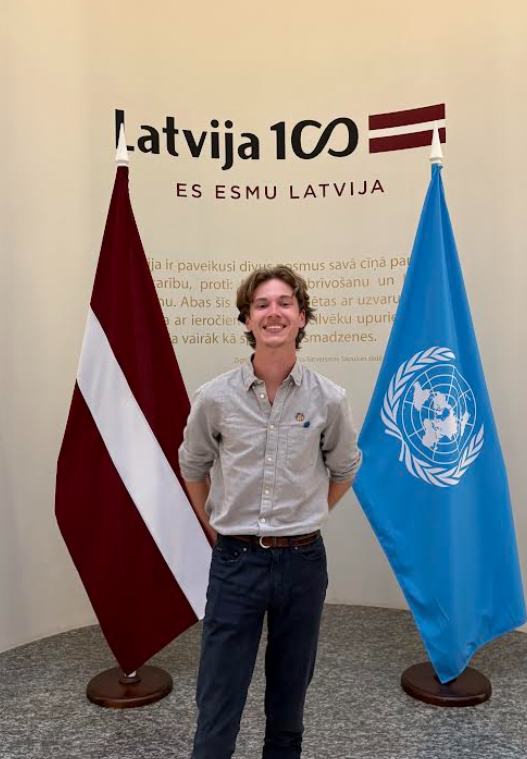
Reinis Giļs
Please introduce yourself
What is your motivation for the role?
What is your vision for the future of JEF?
1. A United JEF (Internal Efficiency & Cohesion)
– Ensure a smooth transition and be at the table from the start to form the strategic priorities and internal structures of the next mandate, improving on this term’s successes.
– Drive organizational efficiency by streamlining cooperation and accountability mechanisms between the Executive Board, Federal Committee, Secretariat, and the national sections.
– Advocate for a stronger central JEF Europe structure that can effectively consolidate and involve all national and local sections in the broader movement.
2. An Empowered JEF (Organizational Stability & Growth)
– Use my previous experiences to help sections improve their internal structure and capacity, enabling sustainable, long-term growth.
– Ensure the movement’s stability by securing multi-year funding for our core Secretariat staff, protecting JEF’s institutional memory.
– Focus shared financing and resources to the grassroots to strengthen genuine connection and unity across the entire JEF network.
3. An Impactful JEF (Political Ambition & Advocacy)
– Defense & Reform: Lead the dual fight against the far-right while proactively pushing for fundamental Treaty Reform (e.g., abolishing the national veto) to make the EU stronger and more effective.
– Political Engine: Ensure that all politically agreed-upon Federal Committee resolutions are consistently utilized as the formal basis for our high-impact, coordinated advocacy campaigns across Europe.
What should be the Political Commissions and Task Forces/ Working Groups for the mandate 2025-2027 and why?
A United JEF (Internal Efficiency & Cohesion)
Ensure a smooth transition and form the strategic priorities and structures of the next mandate.
Drive organizational efficiency by streamlining cooperation and accountability between the EB, FC, Secretariat, and national sections.
An Empowered JEF (Organizational Stability & Growth)
Use my previous experiences to help sections improve their internal structure and capacity, enabling sustainable, long-term growth.
Ensure stability by securing multi-year funding for our core Secretariat staff, protecting JEF’s institutional memory.
An Impactful JEF (Political Ambition & Advocacy)
Defense & Reform: Lead the dual fight against the far-right while proactively pushing for fundamental Treaty Reform (e.g., abolishing the national veto).
Political Engine: Ensure that all politically agreed-upon Federal Committee resolutions are consistently utilized as the formal basis for high-impact, coordinated advocacy campaigns across Europe.
The structure must be streamlined to support effective advocacy, maintaining three PCs and consolidating to three TFs.
Political Commissions (PCs):
PC on Democracy, Governance, and Federalist Reform: The core ideological engine. Mandate: Rule of Law, institutional transparency, and all efforts related to Treaty Reform (e.g., the abolition of the national veto).
PC on Internal European Affairs, Social Justice, and Sustainability: Focuses on policy delivery (e.g., the European Green Deal, economic cohesion, migration, and social rights). This PC provides the material for constructive, solution-oriented campaigns.
PC on External Affairs, Enlargement, and Global Security: Addresses the EU’s global role. Focus: EU Enlargement (Western Balkans, Ukraine), the Eastern Partnership, and common defense and security policy.
Task Forces (TFs):
TF on Advocacy and Campaign Mobilisation: Operational mandate: translating resolutions into transnational campaigns and high-impact actions. This group ensures consistency and rapid political mobilisation when necessary.
TF on Section Organizational Strengthening: Develops and distributes best-practice toolkits (governance, fundraising) and facilitates knowledge sharing between sections.
TF on Inclusivity, Civic Education, and Internal Development: Ensures JEF’s events and opportunities are truly accessible (financial, geographic diversity) and manages the development of Civic Education materials for external training and internal ideological alignment.
My contact information
Benedetta Veneruso
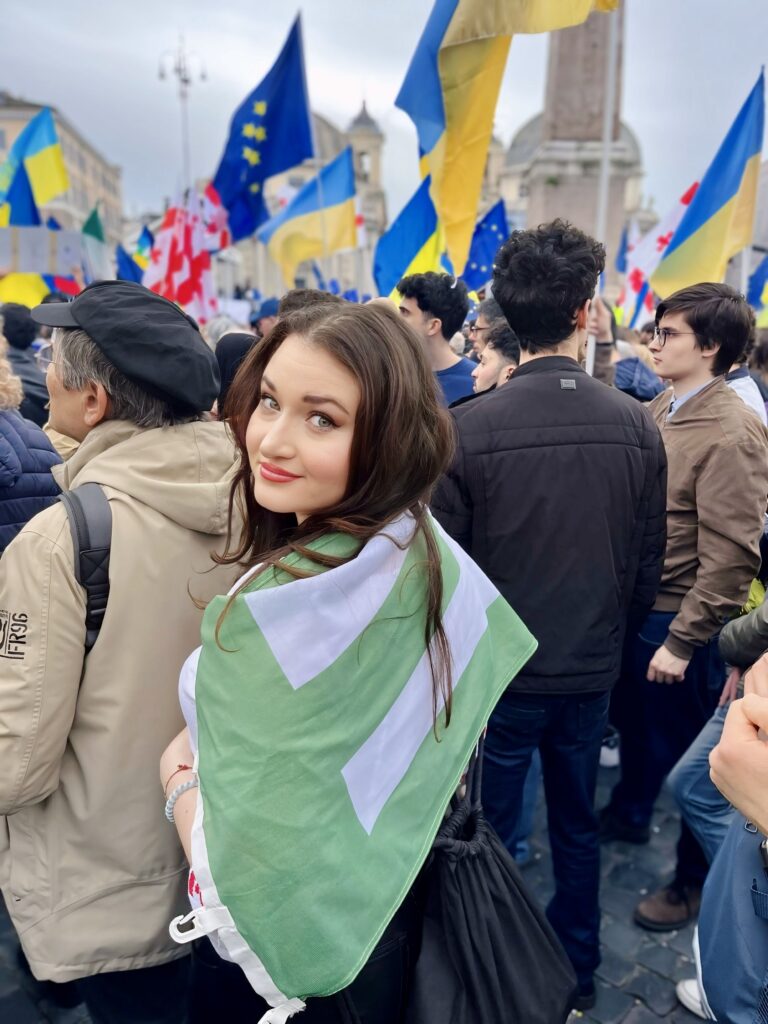
Benedetta Veneruso
Please introduce yourself
My journey began at the intersection of law, politics, communication, and civic engagement. With a degree in Politics and Law (with a minor in Business) from the UK, and a Master’s in progress in Public Administration and e-Governance (Erasmus Mundus in Belgium, Germany, and Estonia), I’ve built my path across Europe — always focusing on democracy, digital transformation, and youth empowerment.
I discovered JEF in 2016 during my European Voluntary Service in Berlin — and I’ve been involved in different ways ever since.
In JEF, my journey started from the grassroots: from Communication Officer of JEF Belgium during the pandemic to Founder and President of JEF Estonia, which grew from a Facebook post in my Soviet-looking apartment into a thriving section of 60+ members that hosted the 2024 Federal Committee in Tartu, European Capital of Culture.
I currently serve as Chair of the Capacity Building Task Force, where I’ve helped sections grow stronger, trained members on governance, and supported resilience initiatives — including two missions in Ukraine with the Council of Europe, on wartime resilience and the environmental consequences of war.
I’ve been a youth worker and Erasmus+ trainer, and also through JEF, I’ve delivered political education trainings across Europe — from digital rights to capacity building and federalism — and represented JEF Europe in two Council of Europe missions in Ukraine, focusing on resilience during wartime and the environmental consequences of conflict. My journey in JEF has always been about building structures, empowering volunteers, and showing up where we’re needed most.
To make my vision transparent and accessible, I created a campaign website (https://benedettacandice.wixsite.com/beefortheeb) and even an AI chatbot — Bee4EB AI on Instagram — that answers questions about my candidacy, priorities, and plans for JEF Europe.
What is your motivation for the role?
Having built a section from scratch, I know how hard it can be to turn passion into structure. As a consultant in AI governance and digital ethics, I also know how to turn ideas into systems that last. I want to use both perspectives to help JEF grow: politically and operationally.
My priorities in a nutshell are:
– Digital Democracy & Ethical Innovation – leading JEF’s reflection on AI, disinformation, and digital rights; establishing a Digital Democracy Lab for youth-led policy dialogue.
– Common Security & Real Solidarity – developing a JEF Security & Resilience Programme to support small, new, and vulnerable sections; while promoting activism in regions under pressure.
– Federalism as Strategy – bring the focus back to the f-word, supporting accessible educational formats, Erasmus+ trainings, and partnerships with UEF and other movements.
– Empowering the Next Generation – strengthening communication and cooperation between the EB and FC; strengthening our Capacity Building in all its forms; ensuring transparency and shared leadership.
What is your vision for the future of JEF?
We are one generation ahead, so let’s act like it.
JEF should:
– Be politically bolder — taking a clear stance on defence, EU reform, and enlargement.
– Be digitally literate — leading discussions on ethical AI, data governance, and information integrity.
– Be present beyond Brussels — supporting activism in places where civic space is shrinking.
– Be federally connected — work creatively and locally to make federalism accessible and tangible. Mini-Ventotene seminars should be hosted in each region!
– Be sustainable and inclusive — investing in capacity building so every section can thrive.
Peace doesn’t protect itself; democracy doesn’t sustain itself. JEF must stand where it’s needed — from Brussels to the Baltic, from classrooms to shelters.
What should be the Political Commissions and Task Forces/ Working Groups for the mandate 2025-2027 and why?
I propose for the Political Commissions:
– Federalism, Democracy & Enlargement: focus on EU institutional reform, governance, democracy and enlargement through federalist lenses.
– Rights & Society: Internal EU policies — digitalisation, climate, migration, mobility, and social issues.
– Defence, Security & Global Affairse: Common Defence, EU foreign policy, neighbourhood, and global cooperation.
Proposed Task Forces:
– Keep Capacity Building TF (continuity and proven impact).
– Evolve Advocacy TF into a broader Communications & Advocacy TF (to improve storytelling, campaigns, and digital reach).
– Introduce an Events & Partnerships to connect strategy, visibility, and implementation (bridging EB, FC, and sections).
– Inclusion, Equality and Intersectionality (focused on reviewing the current Code of Conduct and turning the current inefficient mechanism of protection into a proper strategy)
My contact information
Konstantine Gagnidze
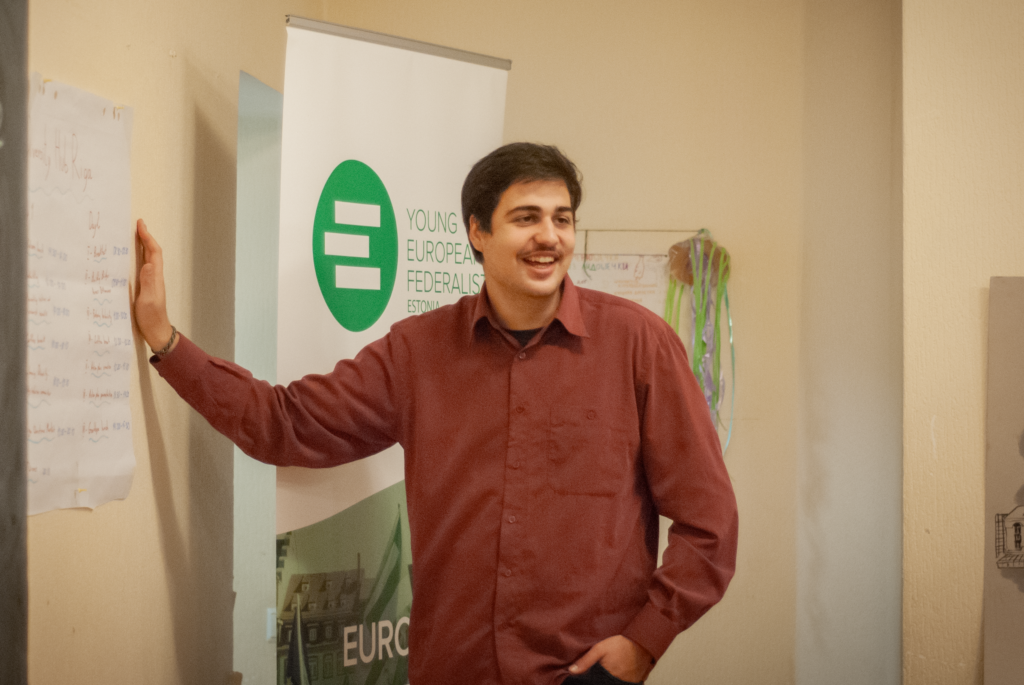
Konstantine Gagnidze
Please introduce yourself
As a trainer in project management, entrepreneurship, and non-formal education, I deliver consultations and trainings for youth, adults, and organizations. A dedicated youth worker and civic activist, I am passionate about empowering young people and advancing European values.
Although I have been in JEF for only two years, my team and I built JEF-Georgia from zero and supported the reestablishment of JEF-Ukraine, strengthening youth participation and European cooperation in the region.
What is your motivation for the role?
A stronger JEF Europe starts with stronger sections and that’s exactly where I’ll focus.
What is your vision for the future of JEF?
1. Capacity building for local and national sections
1.1 Building a JEF Grant Lab mentorship program to help sections access grants.
1.2 Offering customised consultations, mentorship for sections preparing project applications
1.3 Organising training weeks for board members, treasurers, and project teams
At least 20+ new successful project applications by national/local sections, 50+ JEFers trained in grant writing, reporting, and financial management, 5 fully functional resource packs for sections (project application, opportunities, budgeting, visibility, sustainability)
2. JEF enlargement and membership growth
2.1 Personally mentoring new JEF initiatives in Lithuania, Armenia, and Azerbaijan
2.2 Coordinating a new sections incubator program for national, regional and local sections
3 new national sections officially joining at least as candidates or reactivating under JEF Europe, 250+ new members across Eastern Europe and smaller sections.
3. “NEW JEF” campaign
3.1 Leading the “New JEF – Back to Our Roots” campaign: fighting nationalism, disinformation & radicalism
3.2 Promoting federalism education through roleplays, simulations, online content, and local actions
3.3 Organising a JEF Federalism Forum once per year in different European regions
Pan-European “New JEF” campaign rolled out in 20+ countries, Annual Federalism Forum with 50+ participants from across Europe, 10+ new JEF resources on civic resilience, media literacy, and democracy
4. Financial sustainability of the network
4.1 Establishing a JEF Europe fundraising task force
4.2 Working actively with secretariat for increasing budget, applying different operating and other grants
4.3 Supporting development of partnership proposals for private donors and institutions
4.4 ESC volunteers in secretariat
Minimum €150,000 in new grants generated for JEF Europe, 5 new long-term partnerships initiated, increasing JEF Europe’s budget with at least 10%
5. Internal democracy & section inclusion – “A Network That Listens”
Ensure that all national sections are heard, involved, and represented in JEF Europe’s decisions and direction. I will strengthen mechanisms for internal democracy, feedback loops, and collaboration across the network.
Key actions:
1. Launching a “JEF Voice” platform to gather bottom-up ideas and proposals from sections
Ensuring non-EU and smaller sections are visibly and consistently involved in working groups, campaigns, and project teams.
2. Organising quarterly open calls between the EB and national boards to strengthen dialogue.
3. Platform for meeting between presidents and EB and separate platforms for project teams and secretary generals of the national sections.
4. THE ROTATING SECTION ADVISOR TO THE EB
Every 3 months, a different national section is selected to serve as an informal advisor to the EB. The selected section will be invited to EB meetings, consulted on key topics, and spotlighted across JEF’s platforms. This empowers sections to bring their local perspective, raise specific challenges, and propose solutions directly to the leadership.
What should be the Political Commissions and Task Forces/ Working Groups for the mandate 2025-2027 and why?
WG on enlargement and new sections – supporting section development in new regions.
WG on fundraising and financial sustainability.
WG on inclusion and rural youth – ensuring balanced participation from small towns and underrepresented groups.
WG on partnership – working and connecting with other networks and groups in Europe and outside of it too.
My contact information
Sara Rocchetto
Sara Rocchetto
Please introduce yourself
What is your motivation for the role?
This is why I want to join the EB: to actively contribute to strengthening JEF Europe’s communication and to ensure that our message is not only heard, but truly understood.
For me, communication is not just about visibility, it is about building connections, empowering members, and shaping how people perceive our organisation and our values. I want to contribute by bringing clarity, creativity, and consistency to the way we communicate, so that our actions and positions reach people effectively and inspire them to engage.
JEF Europe has always been a space where I felt supported and able to grow, a place that fosters critical thinking and bold ideas. My motivation comes from wanting to give back by helping the organisation communicate with even greater purpose. I want to help transform complex political messages into accessible narratives, amplify the work of our sections, and ensure that our communication reflects the inclusiveness and energy of our movement.
By joining the EB, I hope to contribute to building a stronger, more cohesive communication strategy, one that not only informs, but connects, motivates, and ultimately helps JEF Europe increase its impact across the continent.
What is your vision for the future of JEF?
I see JEF becoming an even more effective bridge-builder, between sections, between countries, and between citizens and the European project. To support this, we need a communication strategy that is creative, accessible, and coordinated across all levels of the organisation. But beyond communication, we also need a stronger sense of shared purpose and smoother cooperation between the EB, the FC, and our national and local sections.
Internally, I envision a JEF where transparency, constructive dialogue, and inclusiveness are the norm. When the EB and FC work closely together, aligning priorities and communicating openly, we create a healthier organisational culture and a stronger foundation for everything we want to achieve.
Externally, I imagine a JEF that dares more politically, one that continues to defend federalism loudly, engages more with civil society, and takes a clear stance on Europe’s key challenges. A JEF that not only reacts to events, but sets the agenda and inspires young people to believe in a more democratic, united, and resilient Europe.
Ultimately, my vision is a JEF that grows both in impact and spirit: an organisation that listens, connects, and leads, and where every member feels empowered to contribute to building the Europe of tomorrow.
What should be the Political Commissions and Task Forces/ Working Groups for the mandate 2025-2027 and why?
I also think the Communication Task Force could be combined with an Event Planning one, creating better coordination and offering stronger support to all national sections, from the smallest to the largest.