Candidates for president, vicepresidents and treasurer
- Candidates for President
- Candidates for Vicepresidents
- Candidates for Treasurer
Candidates for President
Moritz Hergl
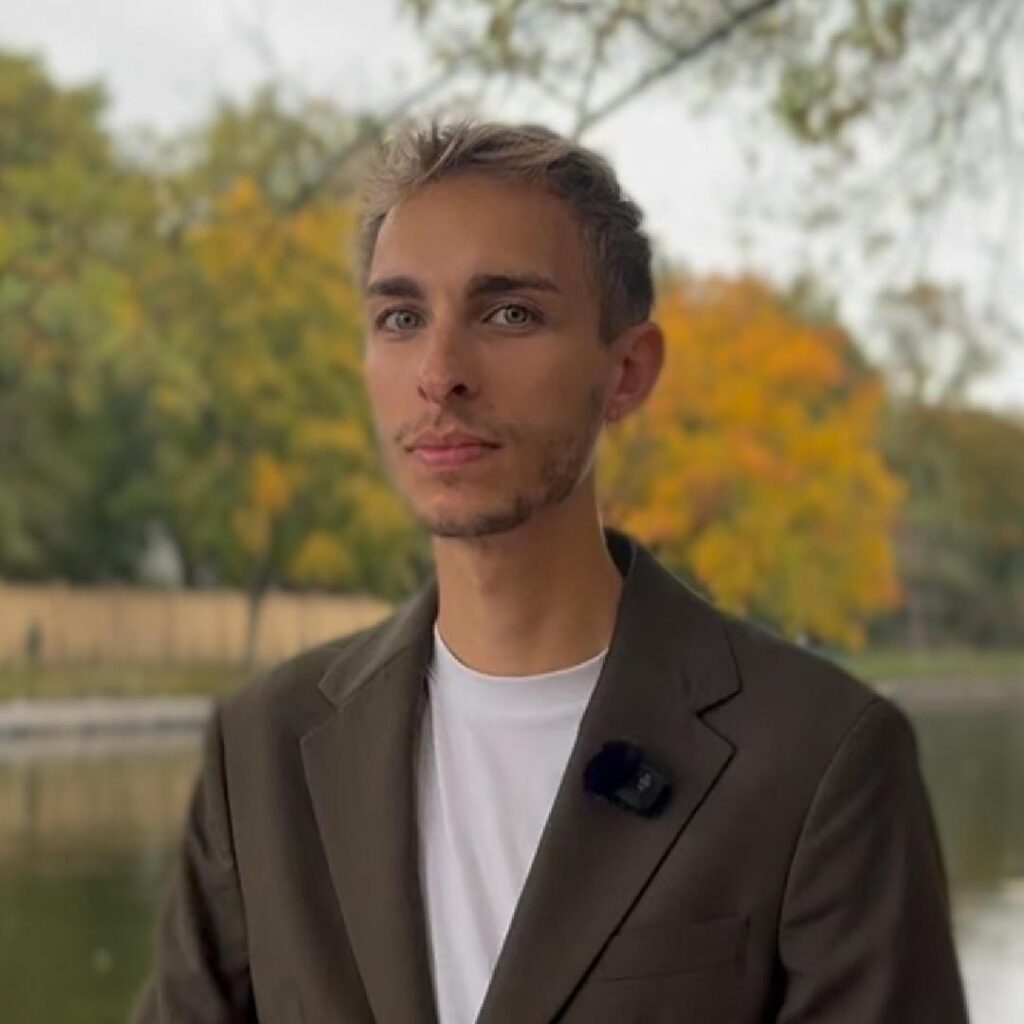
Moritz Hergl
Please introduce yourself
I joined JEF in 2020 after the far-right attacks in Halle and Hanau and became a writer and editor for treffpunkteuropa.de, the German version of TNF. Soon, I became its Co-Editor-in-Chief and led the editorial board for three years. In that time, I helped young journalists think in a European way and built cross-border media collaborations. I am particularly proud to have established the podcast “Europolitix” and to have coordinated several article series. Last summer, I joined the federal board of JEF Germany as Vice-President and IO. In this position, I am coordinating international projects, such as the International Berlin Seminar or the Federalist Peace Forum, various political campaigns such as “Don’t Touch My Schengen” and communicating between the multiple local sections.
Personally, I enjoy the city as much as I enjoy spending time in nature. I love to travel to get to know the culture and reality of life on the ground. As for my professional life, I worked in political communications for various NGOs and institutions. More recently, I have been a trainee in the EP’s press service. I also work as a freelance podcast producer, and I want to bring this experience of creative campaigning and strategic communication to JEF, to make our movement more impactful.
I am ready to serve JEF Europe as a full-time president, supporting the organisation in all areas, from political advocacy and fundraising to strengthening sections on the ground. I will take full accountability for my actions and decisions. My goal is a JEF Europe that works and argues together by day — and shares a toast together in the evening.
What is your motivation for the role?
The challenges ahead are global. Only a Europe that acts together can protect citizens’ freedoms in an increasingly unstable world. We as JEF, are uniquely positioned to be a voice of reason and resistance. At a time when free movement, democratic decision-making and diversity are being questioned, we need a JEF that is visionary, inclusive, and ready to reform itself to meet the challenges of the moment. I therefore propose measures, both politically and to strengthen our internal cohesion:
• Build a civil society alliance on “Don’t Touch My Schengen” to defend free movement as a cornerstone of European identity (beyond EU countries).
• Launch a monthly “Democracy Under Pressure” newsletter, giving sections a platform to report on threats to democracy in their countries.
• Establish a TF against the far right, connecting sections, experts and activists to monitor extremism, to stand up for democracy, and develop strategies on how to “fight back”.
• Focus on the development of Federalist Academies across Europe, beginning with a campaign on “Federalism for Dummies”.
• Reinstate and empower the International Officers Network, as a space for coordination and collective decision-making.
• Enhance internal transparency, with regular cross-level exchanges between the EB, FC and sections, particularly as regards the financial management.
You can find my full action catalogue here: https://drive.google.com/file/d/1E61UvXB1pZBFqjofkOdLMt8nyYvgMOre/view?usp=sharing
What is your vision for the future of JEF?
I want JEF to advocate for a Common European Defence Union that is firmly rooted in democratic accountability and human security. This means addressing the needs of young people who may face conscription, and ensuring that any defence effort goes hand in hand with societal resilience. It’s time to connect our ideals with today’s realities. Not out of fear of an aggressor, but out of courage to defend our values.
JEF should continue to be a platform of hope and participation. Our campaigns, trainings and debates must remain open, creative and inclusive. We should dare to disagree politically — but stay united personally. My vision is a JEF Europe that is courageous: a movement that not only defends Europe’s freedoms but builds the institutions to secure them for the next generations.
What should be the Political Commissions and Task Forces/ Working Groups for the mandate 2025-2027 and why?
As for the PCs, I want to stay with the traditional format and continue the work on institutional reforms in PC 1, especially in relation to treaty change, EU democracy, and rule of law. For PC 2, I see many transversal topics such as climate change, digitalisation, and social resilience as priorities across sectors. In PC 3, I would like to work on reconsidering Europe’s role globally and deepen our cooperation with other federalist movements.
As a new idea, I strongly support the idea of a “Taskforce against the Extreme Right” on the European level. I know this format already from JEF Germany, and I am convinced to lift this initiative to JEF Europe: It should connect members and sections already analysing the strategies of far-right parties and movements that threaten European unity. The TF shall gather experiences and best practices from sections, develop educational and activist tools for countering extremism, create a shared repository with resources and readings, and could potentially explore cooperation with experts in education, research, and protest methods.
Furthermore, I would like to set up a TF co-chaired by one EB member and one FC member that formalizes our work around the Federalist Peace Forum and strengthen our involvement in youth-led peacebuilding. The TF would formalise cooperation with federalist partners in the Middle East and potentially expand the format to other conflict regions.
Three existing TFs are crucial: The TF Capacity Building will support sections in training and upskilling members, continuing the capacity-building seminars. The TF Empowerment & Diversity should review our Code of Conduct and organise events that give minorities and underrepresented voices greater visibility and influence. For the TF Civic Education, I would like to expand its scope to coordinate the education components of the “Federalist Academies” (such as the Ventotene seminar, the Wachenburg and Louise Weiss academies), and to support the “Federalism 4 Dummies” campaign.
In addition, I propose launching a Cross-Section Group “Reform JEF” later in the mandate to review the statutes and prepare concrete reform proposals for the next Congress.
My contact information
Alexiane Terrochaire - - Barbançon
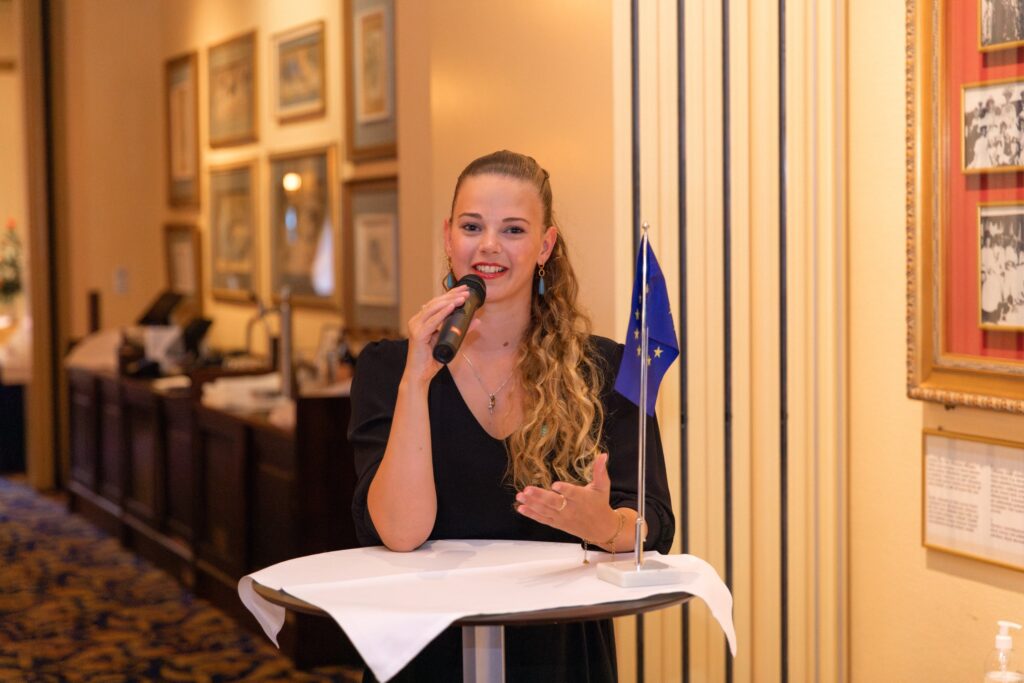
Alexiane Terrochaire – – Barbançon
Please introduce yourself
As Executive Board Member and now Junior Vice-President of JEF Europe, I hae seen both our incredible potential and the need for more structure, visibility, and connection. Over the past months, I have consulted 36 sections across Europe to listen and build a shared vision. I believe leadership is about empowering others to grow and lead. Inspired by Bertha von Suttner’s words — “After the verb ‘to love,’ ‘to help’ is the most beautiful verb in the world” — I want to lead JEF with empathy, ambition, and collaboration, to keep defying the laws of history together for a stronger, federal Europe.
What is your motivation for the role?
We need a Europe that leads with purpose — one defence strategy, one technological and AI agenda for sovereignty, one clear plan for social Europe, a renewed ambition to create a social and environemental deal to tackle climate change, and one clear plan for democracy and enlargement. Federalism offers the practical tools to make our continent stronger and fairer. Yet, too many young Europeans feel disconnected — they hear about crises, not cooperation. JEF’s mission is to bridge that gap, showing that Europe is not distant but a shared promise of rights, peace, and solidarity.
If elected, my presidency will focus on three missions.
- Reclaim the narrative. JEF must be the antidote to euroscepticism by using our members’ diversity to make Europe more human and relatable. We will aim for +10 000 members, broaden our base beyond students, and give inclusivity real meaning. Through the Reclaim the Narrative campaign, we will counter disinformation and disillusionment using storytelling, digital tools, and street actions. Every JEFer — from local sections to national boards — will have a platform.
Roadmap:
- Phase 1 (end 2025–Mar 2026): define priorities (democracy, enlargement, defence, climate, tech), set goals, map partners, and secure funding.
- Phase 2 (Mar–Nov 2026): open online consultations, organise cohesion events and the 2026 Summer University, and publish a joint manifesto.
- Phase 3 (Nov 2026–Jan 2027): design a visual identity, train activists, and build alliances.
- Phase 4 (Feb–Oct 2027): launch the campaign across Europe with hybrid actions and youth mobilisation.
The outcome: a strong, youth-led, pan-European voice reclaiming the pro-European narrative in 37 countries.
- Empower the next generation of federalist leaders. With a renewed Federalist Academy, training will become action. This year-long space will unite 37 sections and partners — UEF, EMI, The New Federalist — to form skilled advocates capable of shaping federalism in any context.
- Make JEF more human, inclusive, and connected. Through mentorship, twinning, and best-practice sharing, every volunteer — from capital to rural areas, inside or outside the EU — will be supported to grow and lead.
This candidacy is not about power, but purpose. I want JEF Europe to be the leading youth voice for democracy, enlargement, and federal reform — to speak when others stay silent, and act when institutions hesitate.
Europe is not built by institutions, but by people who refuse to give up on it. Let’s be that generation. Let’s make federalism real — together.
What is your vision for the future of JEF?
Our first goal is to strengthen JEF’s political credibility. JEF is not just an NGO; it is a political movement. We must take clear positions on democracy, social policies, enlargement, energy, climate, defence, and technology. Through Reclaim the Narrative, JEF can become the leading youth-led federalist voice in Europe.
The second goal is empowerment through education. The Federalist Academy should be JEF’s flagship — combining theory, advocacy, and practice to train a new generation of credible, active young federalists.
Third, we must grow through inclusivity. JEF’s power lies in its people, but we must diversify — reaching young professionals, rural youth, and non-EU activists. Mentorship and twinning will ensure no section is left behind.
We must also reform our structures for more transparency and sustainability — updating statutes, clarifying governance with the FC, and improving financial accountability. Finally, JEF should strengthen cooperation with UEF, EMI, and the Spinelli Group, align communication, and launch European events like Federalism Weeks and the Summer University of Federalism.
My ambition is a JEF that leads with courage, connects with empathy, and inspires through action — because federalism is not a dream, but a roadmap for the Europe we deserve.
What should be the Political Commissions and Task Forces/ Working Groups for the mandate 2025-2027 and why?
-Political Commissions (PCs)
Institutions & Governance – Focus on EU reform, treaty change, and democratic legitimacy. Draft policy proposals on enlargement and the institutional dimension of a federal Europe for instance.
Internal European Affairs – Address youth-relevant issues: rule of law, energy, labour, mobility, and digital sovereignty. Show how federalism strengthens equality and participation.
External Affairs & Global Governance – Define JEF’s stance on enlargement, security, climate diplomacy, and democracy promotion, ensuring that youth’s voices are included in EU external policies.
Task Forces (TFs)
Civic Education – Promote federalism through schools, youth centres, and interactive learning tools.
Capacity Building – Strengthen sections’ projects, events, and fundraising skills.
Empowerment & Diversity – Engage young professionals, rural youth, minorities, and non-EU sections.
Fighting Euroscepticism & Reclaiming the Narrative – Lead campaigns, media training, and counter-disinformation efforts.
Financial Sustainability & Fundraising – Diversify funding (Erasmus+, CERV, foundations) and ensure transparency.
This structure distinguishes policy-shaping PCs from operational TFs, ensuring clarity and efficiency. Implementation includes bi-monthly coordination meetings between EB president and VPs with the FC presidium, monthly update calls with invited PCs and TFs chairs, and an annual EB–FC meeting to strengthen collaboration and accountability.
My contact information
Candidates for Vicepresident
Debora Striani

Debora Striani
Please introduce yourself
Outside of JEF, I work as a political consultant. I grew up near Monza and now live in Rome, but Europe has long been my home: I studied in Spain, France, and Germany and took part in JEF events across almost every EU country. These experiences taught me that federalism is not just an idea, but a daily act of commitment and courage.
What is your motivation for the role?
Training and federalist education: We cannot build a federal Europe without federalists. That’s why I will work to make our internal training stronger and more accessible. I will support sections in organizing seminars by integrating them into larger funded projects and making them more sustainable. I will relaunch the Federalist Academy as a hub of high-level training and reflection, enhancing accessibility through translations and hybrid formats, and introducing systems to collect and adapt feedback across sections.
We need to be politically impactful and true to what makes JEF unique. As VP, I want to coordinate JEF Europe’s political campaigns to make them more coherent, visible, and effectively implemented across the network. My goal is to ensure that our initiatives are both ambitious and concrete. By strengthening cooperation between sections and equipping activists with the right tools, I want JEF to build on one of its greatest strengths — its presence everywhere in Europe. Our campaigns should harness this presence, turning our local diversity into a shared European impact and making JEF an even stronger and more recognisable political voice.
What is your vision for the future of JEF?
2 we must reclaim Don’t Touch My Schengen as a bold political statement. The 10th anniversary in 2026 is a moment to visibly defend and promote the principle of free movement. Our campaign must show that Schengen is not only about borders, but about rights, trust, and the meaning of European unity. This includes actions, cross-border initiatives, and a narrative that highlights what is at stake.
3 we must prepare JEF to play an active role in key anniversaries and political moments. The 25 years of the Charter of Fundamental Rights, the 85 years of the Ventotene Manifesto, and the 80th anniversary of the Hague Congress are not only commemorations. They are opportunities to reframe our federalist vision in today’s context and project it into the future. We must mobilise the full federalist galaxy to build public momentum around these events.
4 The recent loss of funding sources like the CERV grant requires us to rethink our financial governance. We need a clear and proactive financial strategy, including provisional budgets separated by function, contingency planning, regular liquidity monitoring, and a fundraising roadmap aligned with our political goals. Transparency is not optional — it is the foundation of internal trust and external credibility.
What should be the Political Commissions and Task Forces/ Working Groups for the mandate 2025-2027 and why?
I propose adding a Project Working Group, with one representative per section acting as project officer. Its goal would be to align project proposals with local needs, promote mutual learning, and ensure coherent and efficient use of resources across the network.
I also propose creating a Task Force on External Federalist Relations to deepen cooperation with pro-democracy and federalist actors beyond Europe, coordinating initiatives such as the Federalist Peace Forum.
My contact information
Nea-Maria Törmänen
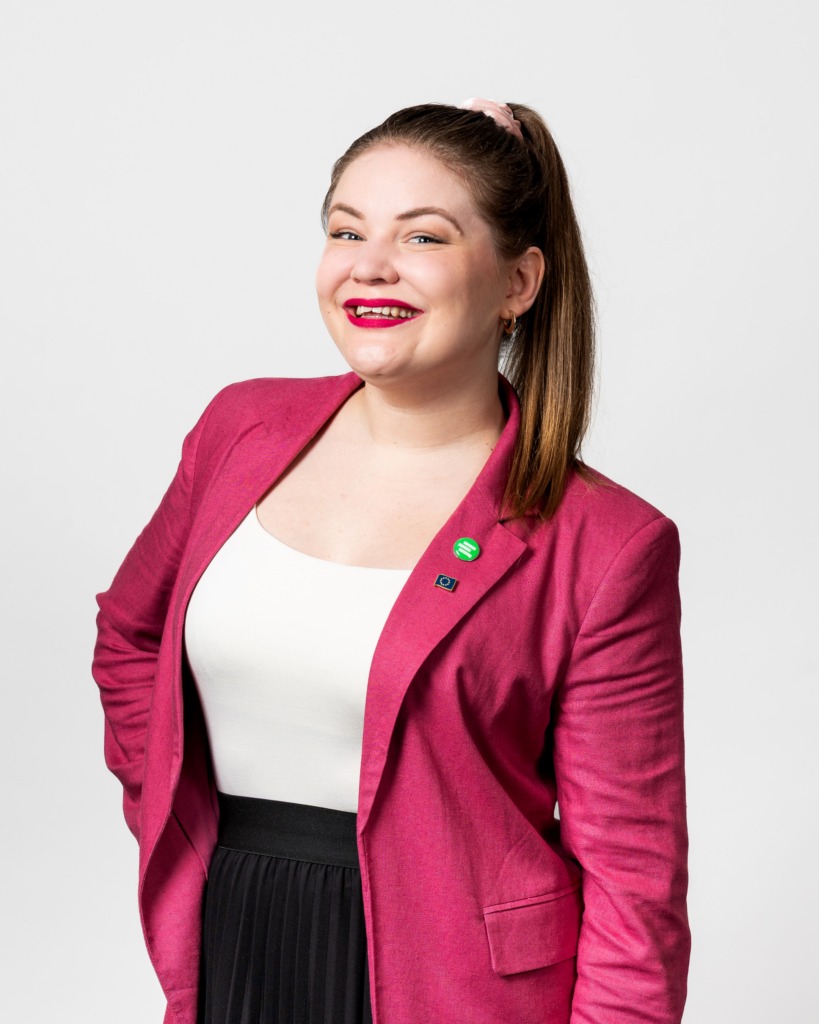
Nea-Maria Törmänen
Please introduce yourself
Throughout these years I have helped shape our political work especially on social justice, climate and culture, always with one goal in mind: strengthening the ideas that bring us together and the vision that guides our work. For me, federalism is not about treaties but about people. It is about making cooperation real across borders, across generations and across every difference that too often divides us.
Outside JEF I work as a casting director in the Finnish film industry where I manage teams, projects and creative collaboration under pressure. It has taught me how to balance structure with empathy and how to make sure every voice in the room is heard. Those same lessons guide how I work in JEF every day.
What is your motivation for the role?
I am running because I want to help JEF grow stronger, more united and more inclusive. I have seen what this organisation can achieve when we work together with respect, clarity and ambition. I want to build on that spirit and make sure every voice in our network is heard and valued.
I believe leadership is about service and responsibility. For me this means helping JEF live up to its full potential as a movement that not only advocates for a federal Europe but embodies it in how we work together.
I want the next mandate to begin with trust, cooperation and shared purpose. That is why I am committed to working closely with all candidates and supporting a strong, united team from day one. I am grateful to have the support of both Presidential candidates – because this movement deserves leadership that works as one. My door will always be open for every candidate, every section and every JEFer. We build this movement together.
What is your vision for the future of JEF?
Politically, I want to focus on three priorities:
1. Defending human rights and democracy across Europe.
2. Tackling the climate crisis with shared federalist solutions.
3. Advancing social justice so that equality and dignity become cornerstones of the European project.
These are not separate fights, they are the foundation of the Europe we want to build.
Internally our priority must be to support the people who make this movement possible. We need a healthy working environment, effective onboarding and clear internal communication. We also need to stabilise our funding base so that activism is never held back by uncertainty. I’m planning on a model to revise the national section contact person system so that every section gets the support it needs and to create guidelines and structures that make accessibility in JEF a real standard, not an afterthought.
JEF’s next chapter must be about unity with purpose. A movement that leads by example and shows that federalism is not only a political vision but a way of working together for something bigger than ourselves.
What should be the Political Commissions and Task Forces/ Working Groups for the mandate 2025-2027 and why?
For the next mandate I propose creating five Task Forces to address our most urgent cross-cutting priorities.
– TF against the Far Right to coordinate actions and narratives defending democracy and fundamental rights.
– TF on Empowerment and Diversity to strengthen accessibility, inclusion and representation across the network and to prepare the Code of Conduct and internal resolution on inclusivity for the Federal Committee meeting.
– TF on Capacity Building to support sections and provide tools for them to develop governance, funding and volunteer management.
– TF on Civic Education to make JEF a stronger actor in European citizenship education.
– TF on the Federalist Peace Forum co-chaired by the FC and EB, to advance JEF’s peacebuilding and dialogue work and to continue the great work done with DFH Palestine and DFH Israel.
These Political Commissions and Task Forces would help JEF combine political impact with internal growth and show what federalism in action truly looks like.
My contact information
Candidates for Treasurer
Anna van de Moosdijk
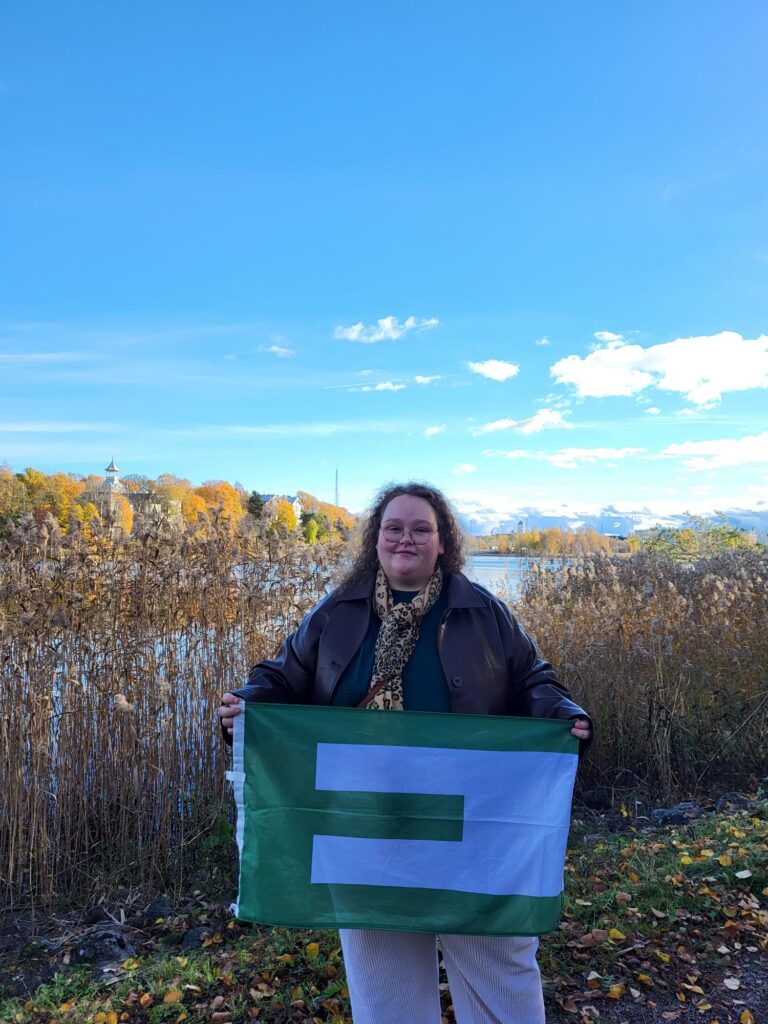
Anna van de Moosdijk
Please introduce yourself
I first discovered JEF while researching youth movements for a university paper. I wanted to see how convincing they could be. Instead, I found myself convinced and hooked on the JEF spirit.
My JEF journey began in Lille during the 2019 European elections. After Erasmus in Estonia, I joined JEF Maastricht, later serving as International Officer and then President of JEF Netherlands during the pandemic, rebuilding the section and ensuring a generational transition. I later served as Treasurer and stayed active in European activities. Since 2023, as Co-Chair of the Task Force on Capacity Building, I have co-led seminars, launched a Twinning Marathon, etc. These initiatives strengthened cooperation across sections and contributed to JEF staying on track in capacity building.
What is your motivation for the role?
I will:
• Strengthen transparency and communication around finances.
• Build direct exchanges between treasurers at all levels.
• Diversify income sources for stability and independence.
• Link financial decisions to political priorities so our budget serves our resolutions.
The next Executive Board will also need to close the debate on membership fees with method and care. This must lead to a fair, transparent and sustainable model reflecting solidarity between sections while ensuring a safety net for JEF Europe. The solution must be one that everyone can live with and take ownership of.
I will work closely with the President and Secretary General to empower the Secretariat, ensuring staff are supported, valued and equipped to deliver on our mission.
Our network is only as strong as its sections. I want to give each one the resources and confidence to grow. My approach:
• Launch a Young CSO Leaders Programme with youth NGO partners and private donors.
• Multiply subgranting opportunities to empower local sections.
• Create TF Project Accelerator to mentor sections in project writing and funding access.
Financial structures must empower, not exclude. They should bridge divides between social backgrounds, rural and urban areas and include young people from the Western Balkans and Eastern Partnership countries facing unequal access to opportunities.
What is your vision for the future of JEF?
Our advocacy should focus on the EU budget, rule of law, inclusion, cohesion and the alignment of economic and social priorities with youth needs. Strengthening federalist awareness, improving financial sustainability and supporting volunteers must remain central.
A federal JEF must be politically bold, structurally solid and socially inclusive, turning conviction into action and showing that federalism works in practice.
What should be the Political Commissions and Task Forces/ Working Groups for the mandate 2025-2027 and why?
Political Commissions
• PC1: Constitutional and Institutional Affairs – treaty reform, rule of law and federal governance.
• PC2: Domestic Policy – cohesion, digitalisation, sustainability, youth and social policy.
• PC3: External Policy, World Federalism and Peace-Building – reform of international institutions and the Federalist Peace Forum.
I am in favour of a rationalisation process, grouping resolutions into thematic frameworks for stronger advocacy and linking PCs to the Federalist Academies.
Permanent Working Groups
• PWG Capacity Building: trainings, Young NGO Leaders Programme, Accessibility Strategy.
• PWG Project Accelerator: project design, fundraising and twinning.
• PWG Awareness-Raising against Nationalism and Far-Right Populism: civic education, campaigns and Federalist Academies.
Task Forces
• TF Empowerment, Diversity and Accessibility: ensure inclusion and accessibility, review the Code of Conduct, raise awareness on sexist violence and support the Feminism × Federalism open-platform.
• TF Statutes Revision: prepare the next Statutory reform.